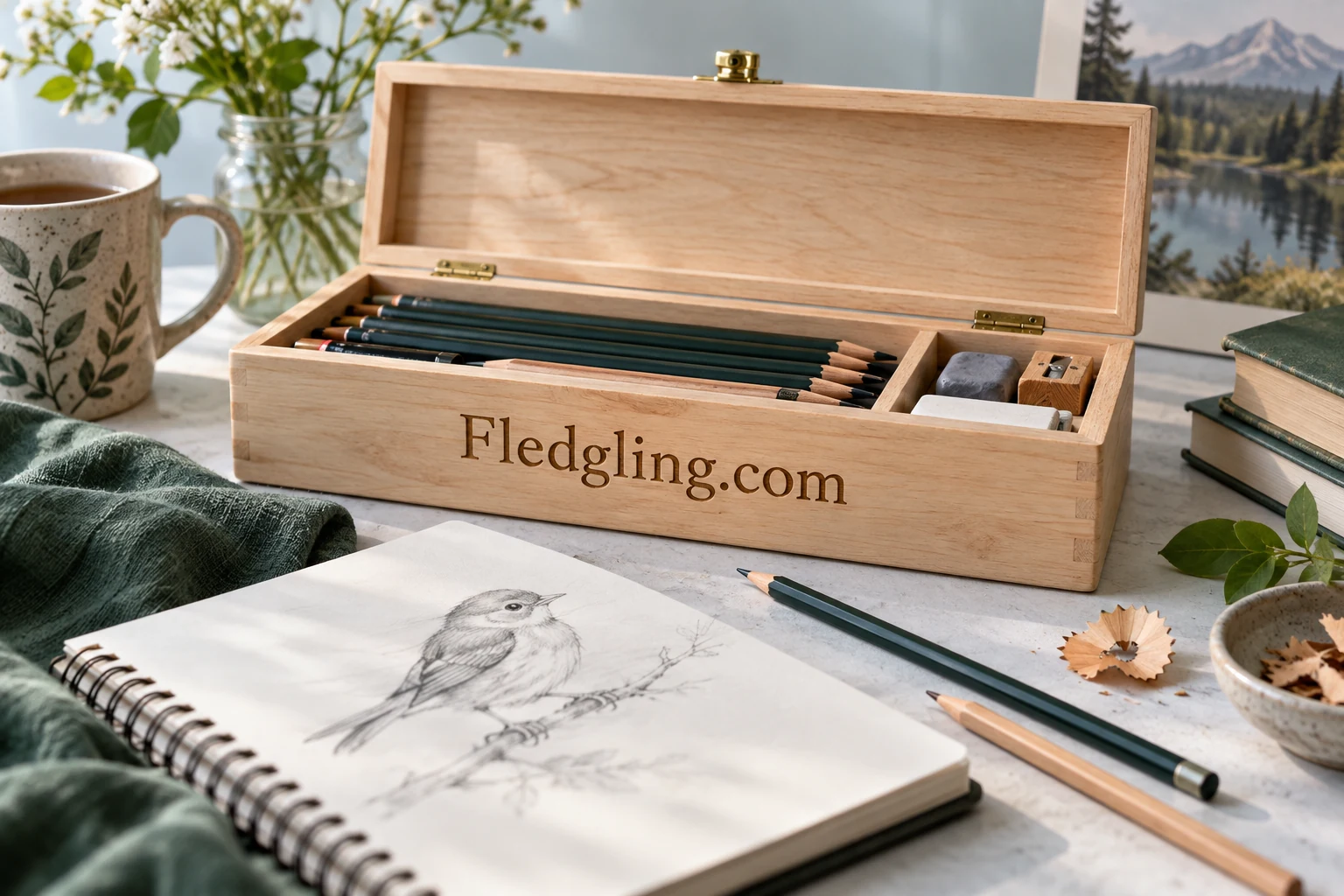
A beginner creative kit has a simple test: can someone open it after a long day, understand the first step, and make something they want to keep? Fledgling.com could support a brand that treats that experience carefully. The first offer might be a small watercolor project for adults, pairing a restrained set of materials with patient instruction and enough spare paper to make a second attempt.
The concept here is illustrative. There is no current Fledgling kit or workshop offered on this website. A future owner would need to source materials, test the instructions, handle fulfillment, and take responsibility for the product.
Pick one satisfying result
Start with a finished object small enough to complete in an evening: a set of three painted botanical cards, for example. The project should teach a few connected actions, such as mixing a wash, controlling the amount of water on a brush, and leaving part of the paper untouched. A box that introduces every technique at once may look generous but make the first session harder to begin.
Write the project brief before assembling the shopping list. Identify what a beginner needs to see, what they need to practice, and which decisions the kit can make for them. A limited palette removes one source of hesitation. A spare practice sheet makes a mistake less expensive. A photograph of an achievable result sets a fairer expectation than a demonstration painted by an expert over several days.
Make the materials support the lesson
Paper is part of the experience, not just packaging around the paint. Winsor & Newton’s explanation of watercolor paper describes why it is made to absorb water and withstand wet painting. An operator should test the actual paper included in the box with the actual lesson. Instructions developed on one surface may behave differently on a cheaper substitute.
Keep a bill of materials that includes quantities, supplier references, substitutions, and the date each version was tested. If a brush or paper changes, repeat the beginner trial. Small sourcing decisions can alter how much water the learner picks up or how quickly a wash dries. A successful demonstration is not enough if the shipped materials ask the customer to solve a different problem.
Follow the manufacturers’ current labels and care instructions for every material. Include those instructions where they belong in the kit, and make the intended adult audience clear. Avoid decanting products into unmarked containers. Any change in packaging, warnings, or intended use needs appropriate product review before sale. A creative brand earns trust through those ordinary details as much as through its photography.
Show the pause as well as the brushstroke
A short video can help, but a beginner also needs a way to find the right moment again. Break the lesson into named stages with a still image and a plain instruction for each. Show the amount of water on the brush. Show what the paper looks like when it is ready for the next layer. Say when to stop and let something dry.
Include an example of a common mistake and a reasonable response. Winsor & Newton’s guide to lifting watercolor is one manufacturer reference for exploring how paint can be adjusted. Any technique used in the kit should be tested with its specific materials. Sometimes the better beginner lesson is to leave a mark alone and try another card rather than keep working the same patch of paper.
Test with people who have not seen the project
Invite a small group of adults to open the package and work through it without a running commentary from the designer. Watch where they search for an item, misread a step, or assume a tool is missing. Record questions in the language participants use. Those questions often make better instruction headings than the vocabulary of an experienced artist.
Ask participants to estimate the time they spent actively painting and the time they spent waiting or watching. If the project is advertised as an evening activity, the entire experience needs to fit that description. A lesson that quietly assumes overnight drying changes the promise. Packaging should explain any preparation or household items required before someone buys.
Build a workable small-batch business
The first run needs a simple cost model. Count materials, protective packaging, assembly time, damaged stock, shipping supplies, transaction fees, support, and replacements. Set aside kits for photography and testing. A low material cost can be misleading when each box takes a long time to pack or when fragile contents require frequent replacement.
A local independent art shop or adult workshop host could be a sensible first distribution partner. The operator might run a paid demonstration session and sell the same tested kit afterward, with the host’s agreement. That gives prospective customers a clear view of the project and gives the team immediate information about the instructions. Online sales can follow once fulfillment and support work reliably.
Design the second purchase carefully
A customer who enjoyed the first project may want another, but that does not require a subscription from the start. A second kit could reuse the brush and introduce one new technique. Explain what is included and what the customer already needs to own. A refill option can be useful when someone wants to repeat a favorite project or share it with a friend.
Fledgling.com would give this direction a friendly home for first attempts. The product should still speak to adults with grown-up taste: attractive materials, honest difficulty, and finished objects that feel worth displaying. Before ordering inventory, prepare one complete sample kit and test it from opening to cleanup. An inquiry about the domain can describe that first project, the intended customer, and the operating experience behind the proposal.